Rapeseed (Canola) Oil |
 |
||||||||||||||||
 |
Gastronomy :Virgin rapeseed (canola)oil, from first cold pressing, unlike the refined oil, is remarkable for its taste and nutritional attributes. Its pronounced taste harmonizes well with cooked and raw vegetables. On a warm or cold salad, for example, with a sprinkling of lemon juice. |
||||||||||||||||
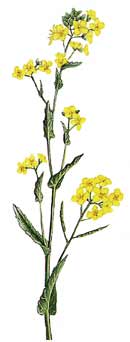
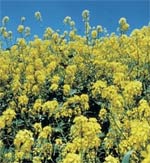
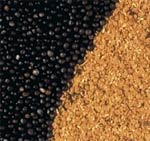
Botanique : The rapeseed plant, Brassica napus, belongs to the Cruciferaceae family. It is an oleaginous, herbaceous plant, born of the hybridation between a variety of cabbage (Brassica oleracea) and a turnip rape (Brassica campestris). It is cultivated in Europe, Canada and China. Its development and growth undergo three stages : rosette, bolting, and flowering. Its yellow flowers are clustered in a raceme. The fruits, or siliques (dehiscent dry capsules typical of the Cruciferaceae family) are formed after self-fecundation of the plant. They enclose the little seeds, of a dark color (brown or black), between 10 and 30 in number. The latter are particularly rich in oil (45%), which encourages the cultivation of rapeseed. After pressing, one obtains an oil of a fabulous yellow color.
|
|
||||||||||||||||
 |
Nutritional Value : Rapeseed oil is a nutritious oil whose profile of fatty acids corresponds ideally with our needs. It is especially valuable for its high linolenic acid, omega 3, content. Omega 3 is what is called an "essential" fatty acid, meaning that it is indispensible to our health, and our body can not synthesize it itself. Aditionally, rapeseed oil is a source of vitamins E, A and K, which give it antioxidant and regenerative virtues. This oil is a queen of oils, even more beneficial to health than olive oil. Regular consumation of rapeseed oil is today highly recommended based on scientific research.
|
||||||||||||||||
Cosmetic interest : Rapeseed oil is rich in vitamin E, and is therefore excellent for the skin. Applied daily, it is a powerful antioxidant.
|
|||||||||||||||||
| Average composition in vitamins and fatty acids | |||||||||||||||||
|
|||||||||||||||||
|
Organoleptic profile COLOR : Greenish yellow, lightly ambered AROMA : powerful, rich, of average complexity, the nose associates a nuttiness, like that of sweet almonds with notes of dried herbs, such as hay or straw, but equally with asparagus and artichoke. FLAVOR : Delivers its richness in full force, with a strong viscosity, develops a beautiful aromatic purity and the aromas detected by the nose are directly translated to the palate within the mid to lingering mouth feel. We especially recognizes the floral and vegetal expression of its nature. CONCLUSION / HARMONY : This oil is surprising, its very lightly roasted which gives it its own place in tasting, it accompanies all cooked vegetables, salads dominant in arugula (rocket), raw salmon, pistou pasta (garlic-basil), roasted red peppers, or stuffed peppers (stuffed with rice/minced meat and coriander).
|
|||||||||||||||||